Home Blog Shared House Guide Unwritten Rules of Taiwan: What 190+ Foreign Residents Say About Life on the Island


For prospective exchange students, digital nomads, and expats preparing to move, the most important opinion is your peers, not what some marketing tourism board says . Taiwan has a very active foreign presence in the region of 1 million (which is one of the highest in the world by percentage). which you can tap into on many social media like Reddit forums , Instagram etc. Here is what actual long-term foreign residents in the community had to say about the habits they picked up in Taiwan—and why going back home feels so surreal.
You stop checking train schedules because the MRT arrives every two minutes. You leave your laptop on a café table while grabbing boba. You instinctively look for yellow queuing lines on subway platforms, and you expect 24/7 convenience around every corner.
It isn't until you travel back home to North America, Europe, or Australia that reality hits: your daily baseline has completely changed.
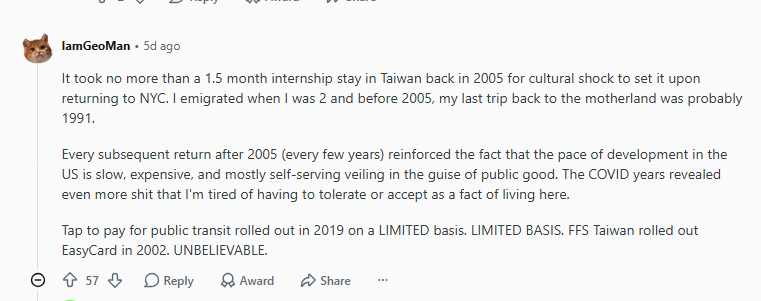
Recently, a post written by us sharing the differences we experienced after living here long-term and visiting North America exploded into a trending Reddit discussion.
"Taiwan culture vs western: Anyone else get crazy reverse culture shock going back home after living in Taiwan for long time?"
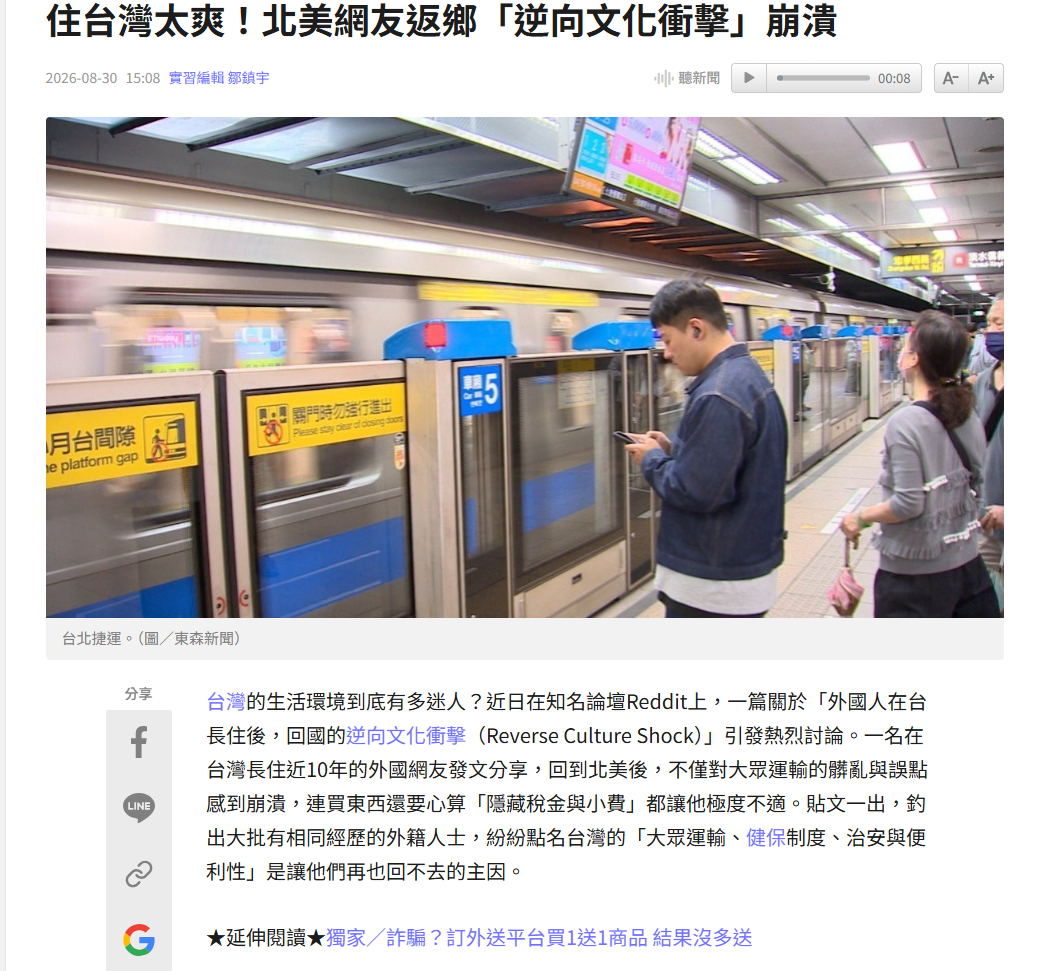
The thread tapped into a phenomenon that almost every long-term foreign resident experiences: living in Taiwan (Asia )after a while quietly rewires how you interact with daily life. The discussion gathered over 132,000 views, 220+ upvotes, and 190+ detailed comments—and was even officially featured by EBC News (東森新聞) under the headline: “Living in Taiwan is Too Good! North American Netizen Suffers Collapse from Reverse Culture Shock Back Home.”
One of the biggest themes highlighted in the thread was the stark contrast between Taiwan's public transit network and Western subway systems. many cited that Taiwan system is more maintained than the ones they are use to so it's much more reliable to use and when living in Taiwan not having your own transportation isn't a hindrance to life.
The Yellow Line Discipline: Long-term residents shared how weird it felt returning home and seeing crowds board subways chaotically without single-file lines. In Taiwan, paint markings on MRT floors create an automatic, orderly flow.
No Food, No Drinks, Spotless Trains: The strict ban on eating, drinking, or chewing gum past the MRT yellow line keeps carriages quiet, clean, and insect-free. Commenters noted how jarring it was to return home and see passengers eating messy meals or leaving trash on seats.
Free Public Restrooms: Finding a clean, accessible toilet in Western downtown can feel like a hunt. Every Taipei MRT station provides free, well-maintained public restrooms—a feature expats miss heavily when traveling abroad.
Abrupt changes : some mention having systems suddenly close without prior warning or being late , which makes using it a guessing game. (in Taiwan ,of course incidents happen and can cause a metro line to go down IE(typhoon days , repairs ) but you will be made aware a lot sooner , most services in taiwn work on schedule and you can track them via google maps and Taiwan go app).

Checkout transactions in Taiwan are straightforward, predictable, and stress-free.
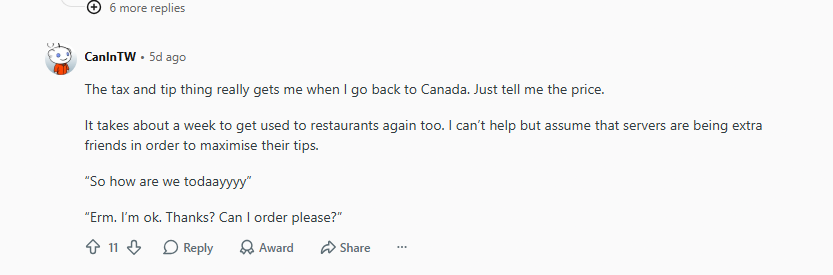
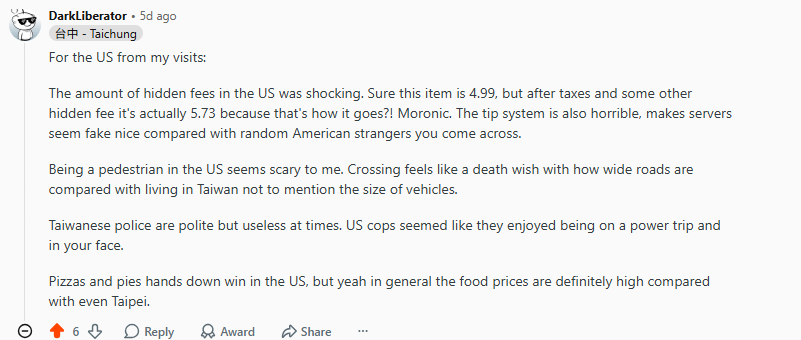
The Listed Price is the Final Price: Handing over a NT$150 bill for a NT$150 menu item is one of the most underrated perks mentioned by residents. Sales tax (5% VAT) is built into displayed prices by law, and tipping does not exist.
The "Checkout Surprise" Back Home: Expats returning to North America report feeling sudden financial friction when a $15 menu item turns into $22 after mandatory 13%+ sales taxes and expected 18-20% tips.
Foreigners moving to Taiwan quickly discover that convenience stores aren't just place to grab a quick soda—they are neighborhood lifelines.
🗣️ Community Voice: " [INSERT YOUR FAVORITE REDDIT COMMENT ABOUT 7-ELEVEN / CONVENIENCE STORES HERE] "
What Newcomers Learn: Within a 2-minute walk from almost any apartment, you can pay utility bills, pick up online shopping packages, purchase train tickets, send dry cleaning, print documents, and buy fresh meals 24 hours a day.
The Reverse Culture Shock: Realizing that convenience stores back home are often just basic gas station shops with limited services.
Perhaps the most profound realization highlighted by long-term expats is how Taiwan lowers your subconscious stress levels.
High Social Trust: Leaving your phone or bag on a café table while stepping away to order a drink is standard practice in Taipei. Walking through quiet city streets late at night feels completely safe.
Unlearning Street Vigilance: Commenters shared that the hardest habit to "unlearn" is hyper-vigilance. Living in Taiwan conditions your brain to drop its guard, making it surreal to return to cities where you must constantly lock up belongings or watch your back.

Beyond transit and convenience stores, long-term foreign residents in the community frequently point out how living in Taiwan shifts your relationship with food, clothing, and daily movement.
🗣️ Community Voice: " [INSERT YOUR FAVORITE REDDIT COMMENT ABOUT CLOTHING SIZING / PORTIONS HERE] "
The "Taiwanese XL" Reality Check: One of the most common micro-culture shocks for Western expats is clothing and shoe sizing. An Asian "Large" or "Extra Large" often equates to a Western "Medium" or "Small." Finding larger shoe sizes or broader fits often requires shopping at specific global chains or international online stores.
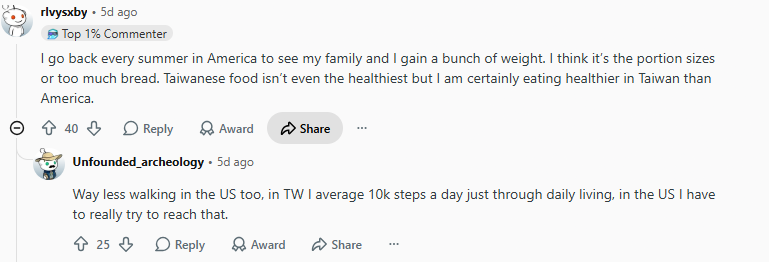
Smaller Portions, Less Food Waste: Restaurant and bento portions in Taiwan tend to be more modest compared to North American servings. Instead of massive single meals with leftovers, the Taiwanese food style emphasizes fresh, balanced meals—often leaving you satisfied without feeling uncomfortably stuffed.
Incidental Daily Fitness: Even if you aren't hitting the gym, living in Taiwan specifically big cities dramatically increases your daily step count. You do not need your own transportation and walking to MRT stations, climbing stairs in older walk-up apartments, and popping out on foot for late-night snacks mean residents burn significantly more background calories compared to car-dependent Western suburbs.
To give incoming students an honest perspective, long-term expats in the community also highlighted things they miss from their home countries:
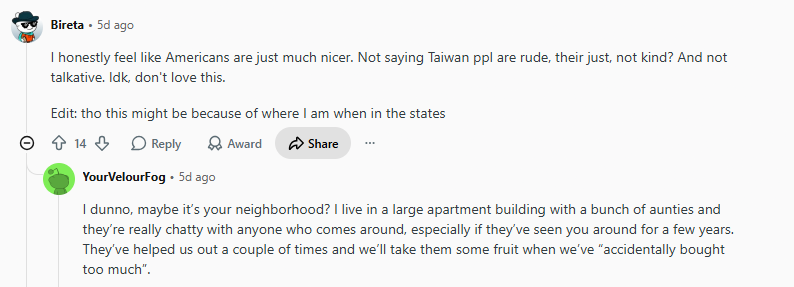
Spontaneous Friendliness & Small Talk: Cashiers, security guards, and strangers in Western countries often initiate casual, unprompted conversations. Taiwanese courtesy is exceptionally polite, but public social interactions tend to be more reserved. There is a famous quote that says "the things that make a county great are also some of it's downside " . "不要給別人麻煩" translated to don't inconvenience other people is a core part of taiwan and many asian countries which makes it safer to live in but sometimes means that random from strangers will happen less.
Housing Space & Western Kitchens: Most compact urban apartments in Taiwan rely on hot plates or air fryers rather than full-sized ovens and spacious counter tops.

conclusion :Adopting new cultural norms takes time and ultimately you can only learn through experience not just reading other opnions.— small things like understanding how to sort municipal recycling bags to discovering the best local bento shops (Biàndāng) to larger things like making conncetions and societal etiquette in different places.
The consensus among long-term residents? Don't navigate the transition alone.
Surrounding yourself with a mix of local Taiwanese residents and experienced expats makes decoding these cultural nuances effortless. Living in an international share house provides an instant, built-in support system where you can share culture shock experiences, explore night markets, and adapt to Taiwanese life smoothly from day one.
Want to check out the original discussions that sparked this guide?
📖 Original Reddit Discussion:
📰 Media Coverage: Read the news feature on